Make the hard call before it's real.
Physician-written emergencies for Canadian paramedics. Every decision scored against protocol the moment you make it, and your service sees the team, never one person.
One patient.
Four choices.
Your call.
This is how every Imedica scenario feels. Pick what you'd do first. The verdict comes from the physician's rules, instantly, and the patient responds.
- Same decision, same score, every time
- Timing counts: right drug, given late, is marked late
- Wrong choices change the patient
Dispatch · Priority 4 · Chest pain
On scene 03:12
58-year-old man, crushing chest pain for 40 minutes, pale and diaphoretic. Took nothing before you arrived.
- HR
- 108bpm
- BP
- 94/60mmHg
- SpO₂
- 95%
- RR
- 22/min
II · 25 mm/s
What do you do?
Each choice is scored against the physician's rules the moment you make it.
Illustrative case. Follow your service's medical directives.
The calls that matter most are the ones you see least.
A paediatric arrest. Anaphylaxis at a school. A tricyclic overdose. Some crews meet these once a year, some never before the night it counts. Recertification day can't close that gap, and the road is the wrong place to learn.
Imedica gives those calls somewhere to happen first: ten-minute scenarios, run between calls on a phone or a station computer, each written and checked by an emergency physician.
00:00
00:00 · 01 / 03
Dispatch
The call arrives the way it would on the road: age, complaint, a worried caller. You walk in with the same thin picture.
Priority 4 · inbound
“24-year-old woman, stung by a wasp at a park. Her friend says her lips are swelling and she can't breathe properly.”
Responding · ETA 6 minutes
00:40 · 02 / 03
Decide
The monitor moves. The patient answers, or doesn't. The full action menu is open, wrong answers included, and the clock keeps running.
HR
128
BP
84/50
SpO₂
89
RR
30
- Epinephrine IM 0.5 mg
- Diphenhydramine 50 mg
- Salbutamol 5 mg neb
- Oxygen NRB 15 L/min
09:12 remaining
09:15 · 03 / 03
Debrief
Every decision comes back tagged against the physician's rules, with the reason, the directive behind it, and what a stronger run looked like.
Anaphylaxis after a wasp sting
Proficient
86%
- 00:07Epinephrine IMCorrect
- 00:31Oxygen, NRBCorrect
- 01:10Diphenhydramine firstSuboptimal
- 05:20Repeat epinephrine IMCorrect
Physicians write the rules.
The rules decide the score.
Claude explains why.
The grade comes from deterministic rules a physician wrote for that moment in the call. Claude then writes the debrief in plain language. It can't change a score, it never sees who you are, and physicians review what it writes.
Debrief · Inferior STEMI
Developing
78%
- 00:4812-lead ECGCorrect
- 01:30ASA 162 mg chewedCorrect
- 02:05Right-sided leads V4RAcceptable
- 03:40Nitroglycerin 0.4 mg SLHarmful
- 05:10IV fluid bolus 250 mLCorrect
Why nitro hurt here. V4R showed right-ventricular involvement. The RV depends on preload, so nitroglycerin dropped the pressure to 71/40. The fluid bolus that followed was the right recovery.
Claude · physician reviewed
Not just a score. The reason.
Each decision is tagged in triage colours, with the physician's rationale, the directive it comes from, and the step you missed. Then a short written debrief ties the run together.
See how a scenario is builtNames and scores never share a table.
Who you are lives in one database schema. What you did lives in another, under a keyed one-way hash. Reporting reads only the de-identified copy, and refuses to show any group smaller than five people.
- PIPEDA and PHIPA
- Separation enforced in the data model, not by policy.
- Built for Canadian hosting
- Designed to run entirely in Canadian data centres.
- On the record
- Every edit, invitation and sign-in is audited.
- Nothing sold
- Training data stays with the service that owns it.
Built by clinicians, not an edtech studio.
About Imedica
Chief Executive Officer
Dr. Maryam Daneshian
Anesthesiologist. Owns clinical validation and the partnerships with services.

Chief Product Officer
Dr. Salman Erfanian
Emergency medicine. Writes and reviews the scenarios and their rules.
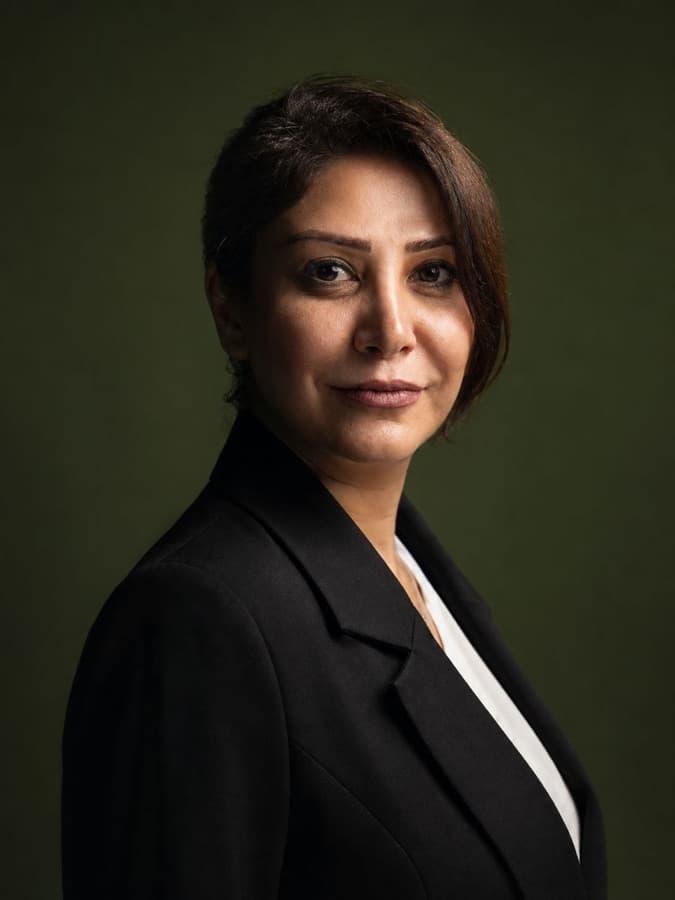
Business Development
Dr. Somayyeh Motevalli
Runs the pilots and keeps training directors close to the roadmap.
Run a pilot with your service.
Six months, your paramedics, scenarios matched to your directives, and a before-and-after view of where the team improved. Pilots open in Ontario for 2026.
Book a demo